

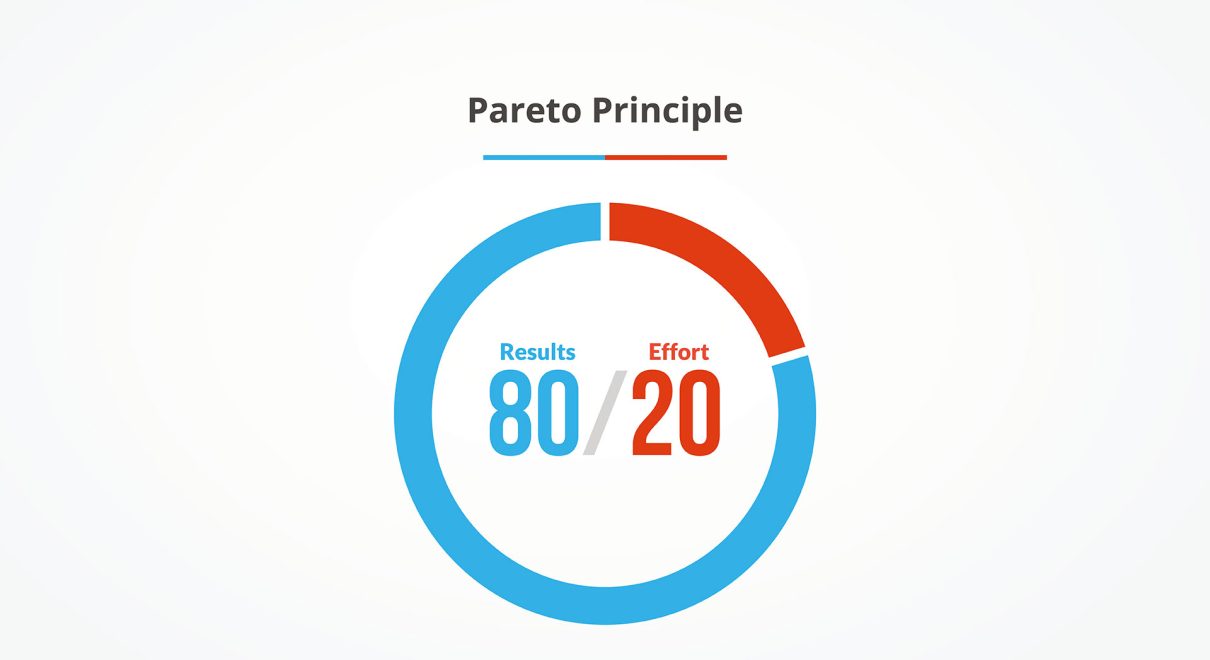
Many entrepreneurs experiment with various strategies to grow their businesses and improve efficiency. However, one highly effective principle often goes unnoticed: The Pareto Principle. Developed by Italian economist Vilfredo Pareto, this rule has the power to revolutionize areas ranging from time management to customer relations, sales, and operations.
What is the Pareto Principle?
The Pareto Principle, also known as the 80/20 Rule, states that 80% of outcomes are often driven by 20% of inputs. This means a small minority typically accounts for a large majority of results. For example:
- 100 customers? 20% of your customers bring in 80% of your revenue.
- 100 products? 20% of your product line accounts for 80% of your sales.
This principle serves as a powerful guide to prioritizing efforts and boosting efficiency in your business.
Applying the Pareto Principle in Business
To apply the Pareto Principle effectively, focus on analyzing your customers and streamlining operations:
1. Customer Analysis
Identify Your Most Valuable Customers
Analyze your revenue to find the top 20% of customers contributing to 80% of your earnings. Offer these customers tailored promotions, loyalty programs, or personalized services to maximize their value.
Let Go of Problematic Customers
Reduce focus on the bottom 80% who often cause issues, demand extended payment terms, or provide minimal returns. This allows you to allocate resources more effectively.
2. Operational Efficiency
Resource Management
Identify the 20% of tasks or processes that generate the most significant impact, and optimize or automate them to reduce costs and improve productivity.
Time Management
Prioritize high-impact activities that yield the majority of results, ensuring your team works more effectively.
Using the Pareto Principle in Sales and Marketing
The Pareto Principle is a valuable tool for optimizing your sales and marketing strategies:
1. Product Performance
Focus on Profitable Products
Identify the 20% of products responsible for 80% of your sales and invest in them. Increase advertising budgets, optimize inventory, and tailor your sales strategies around these key items.
Streamline Your Product Range
Simplify your product offerings by phasing out low-demand items, which reduces costs and creates a more focused strategy.
2. Targeting the Right Customers
Loyal Customers
Offer exclusive deals to your most frequent buyers to encourage repeat purchases and referrals.
Digital Advertising
Analyze which 20% of your advertising channels or campaigns drive 80% of your conversions and allocate more budget to those.
Pareto Principle in Product Diversity and Inventory Management
The Pareto Principle can also optimize product management, ensuring your resources are used where they matter most:
1. Inventory Management
- Reserve more inventory space for the top 20% of products that drive most of your sales.
- Use promotions or clearance sales to move slow-moving products and free up resources.
2. Developing New Products
- Study the high-demand product categories that form your top 20% and focus on developing new offerings in similar areas.
- Discontinue or reduce investment in underperforming products to allocate resources more effectively.
Embrace the Pareto Principle
The Pareto Principle can bring transformative changes to your business and life. By applying this principle:
- Increase your revenue,
- Improve operational efficiency,
- Achieve more significant results with less effort.
Remember, success often stems from a few well-made decisions. Achieving more with less is possible when you make the Pareto Principle the cornerstone of your business strategies. By doing so, you not only grow but also build a sustainable foundation for long-term success.